

June 23, 2026 · 6 min read
Osteoporosis: why bones weaken and how to recognize it in time
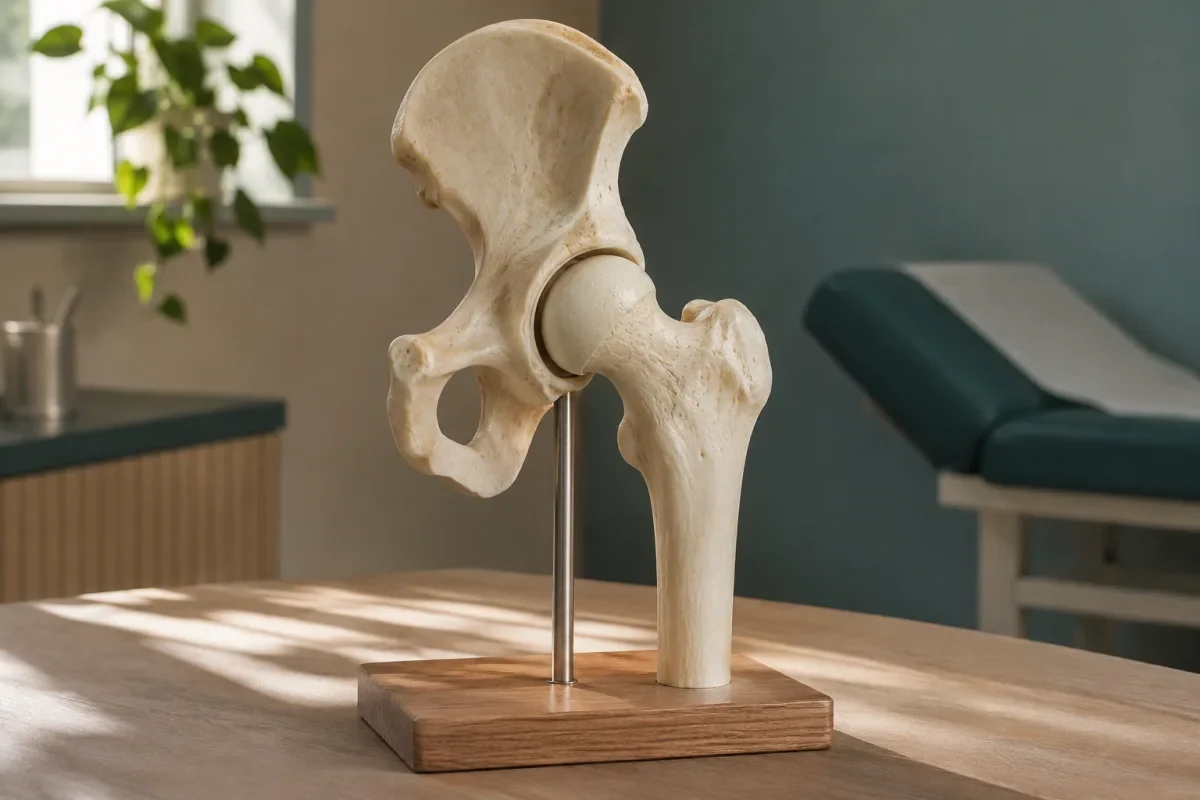
Osteoporosis is one of those conditions that is most often discovered too late, only when a fracture occurs. It is a gradual loss of bone mass due to which the bones become weaker and more brittle than they should be. On this page, we explain what osteoporosis is, why bones lose density, what the risk factors are, and how it can be recognized and slowed down in time.
The good news is that osteoporosis is not an inevitable part of aging and its course can be influenced. The earlier you find out what the condition of your bones is, the more room you have to act.
What is osteoporosis?
Osteoporosis is a condition in which bone loses density and changes its internal structure, becoming weaker and more susceptible to fractures. Our bones are not immutable: throughout our life they are constantly renewed, old bone mass is broken down, and new bone mass is created.
In osteoporosis, this balance is disturbed, so the bone wears out faster than it is renewed. Over time, it becomes more porous and fragile, and a fracture can occur even with a minor fall or effort that would not endanger a healthy bone. The spine, hip and wrist are most commonly affected.
Why do bones lose density?
Bone density naturally increases until youth, when it reaches its peak, and then slowly declines with age. In some people, this loss is more pronounced and faster, and then we talk about osteoporosis.
This process is influenced by several factors. In menopausal women, the level of estrogen, a hormone that protects bones, decreases, so bone loss can be faster. With aging, bone regeneration slows down in both men and women. All of this is linked to lifestyle and diet, which can speed up or slow down the loss of density.
What are the symptoms of osteoporosis?
Osteoporosis is often called the silent disease, and for good reason. In the early stages, there are usually no symptoms, the bones weaken gradually and without pain, so many do not even suspect that it has happened until a fracture occurs.
However, there are signs that may indicate that bone mass has already weakened. These are a fracture caused by a minor fall or effort, a gradual decrease in body height, a hunched posture, as well as back pain that can be a consequence of changes in the vertebrae. If you notice any of the above, it is worth consulting a doctor.
Who is at increased risk?
Osteoporosis can affect anyone, but some people are more likely to have it. The risk increases with age and is more pronounced in women, especially after menopause.
Hereditary factors also influence the tendency, so osteoporosis in the family is a signal that attention should be paid. There is also a lifestyle and diet poor in calcium and vitamin D, as well as insufficient physical activity, because bones, like muscles, are strengthened by movement and exercise. Certain chronic conditions and medications can also affect bone mass, which is best discussed with your doctor.
How is osteoporosis detected?
Since osteoporosis has no symptoms for a long time, it is crucial to measure bone density. This is done with osteodensitometry, a simple and painless examination that assesses how strong your bones are and whether there is bone loss.
There are several methods of measuring bone density. At Nela Medica in Belgrade, the examination is performed by ultrasound osteodensitometry, which makes the assessment using ultrasound, so without X-ray radiation. The examination is quick and painless, pleasant and simple, and the findings help to spot the weakening of the bones in time and, if necessary, to react in a timely manner. This method is excellent for early assessment and monitoring of bone health.
How to prevent osteoporosis?
Bone health can be influenced at any age, and the best results are achieved through a combination of habits that are cultivated over the long term. Although prevention and possible therapy should always be coordinated with your doctor, there are a few general guidelines that can help.
It is important to take care of sufficient intake of calcium and vitamin D through diet and, on the advice of a doctor, supplements. Regular physical activity, especially weight-bearing and strength training, helps keep bones and muscles strong. It is also useful to reduce factors that weaken bones, and in old age to pay attention to safety in the house in order to reduce the risk of falls.
If you want to check the health of your bones, check out our service ultrasound osteodensitometry. At Nela Medica in Belgrade, you get the results on the same day, the appointment is usually within 48 hours, and a referral is not required when you pay for the examination yourself. For an appointment or additional questions, call us or write to us on Viber at 065 471 5055.